
Digital vs paper wedding invitations: which should you choose?
An honest comparison of cost, convenience, etiquette and guest experience, so you can decide what suits your wedding and your guests.
Blog / Wedding invitation websites
Etiquette · 7 min read
Who gets an invitation, how to address it, who may bring a guest, and the small courtesies that make guests feel looked after, without the stuffy rules.
New to digital invitations? Read the complete guide to digital wedding invitations.
Invitation etiquette sounds formal, but almost all of it comes down to one idea: every guest should know, without asking, whether they are invited, who else is included, and what you would like them to do next. Get those three things right and the rest is style. This guide walks through the decisions in the order you will meet them.
Wording depends on who is invited, so settle the list first. A practical way to do it is in three passes: the people you cannot imagine the day without, the people you would love to have, and the people you feel you should invite. Your venue capacity and budget decide how far down the list you go. Once the list is fixed, avoid adding “just a few more” after invitations go out; late invitations are the ones guests notice.
The names on the invitation are the guest list. Whoever is named is invited; whoever isn't named isn't. That is why addressing matters more than any line of wording.
With an online invitation you can do the same thing digitally. Card of Vows lets you create a personal link for each guest that greets them by name when they open it and offers only the number of seats you have reserved for them, so the guest list stays exactly as you planned.
The fairest approach is a simple rule you can explain in one sentence, for example: “partners of anyone married, engaged or living together”, or “everyone in the wedding party gets a guest”. Apply it to everybody and you never have to justify an individual case. If someone asks to bring a guest you haven't named, a kind reply is enough: “We'd love to, but our numbers are very tight, so we're only able to invite the people named on the invitation.”
Adults-only, family-only or everyone welcome are all fine choices. Whichever you pick, the invitation should make it clear without being blunt. We have a whole guide on how to word an adults-only wedding, including what to say when parents ask.
For the first announcement, including destination and peak-season timing, see when to send save the dates.
The card itself carries the essentials: who is hosting, the couple's names, the date, time and venue, and how to reply. Everything else (accommodation, transport, the order of the day, dress code, gifts) used to go on separate insert cards. On a wedding website it simply becomes its own section, so the invitation stays clean and guests can find the details when they need them.
Two traditional rules still hold:
Traditionally the hosts are named first, which used to mean the bride's parents. Today most invitations come from the couple, from both families, or simply open with “Together with their families”. There are full examples for every situation in wedding invitation wording.
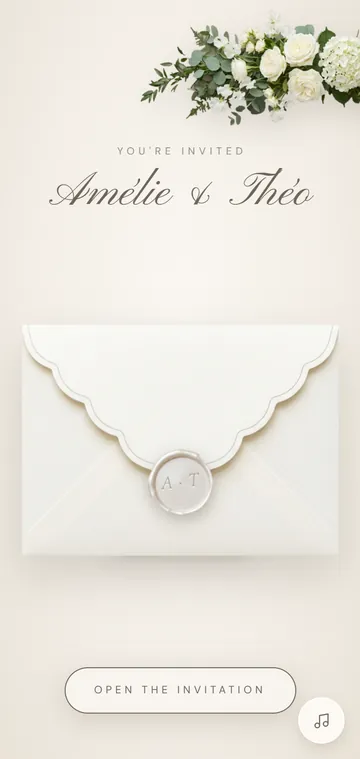
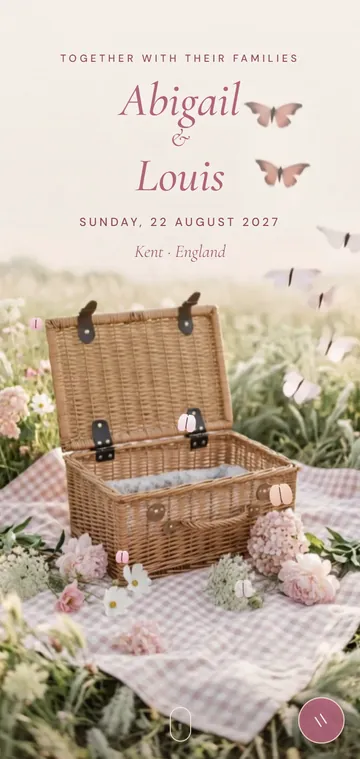
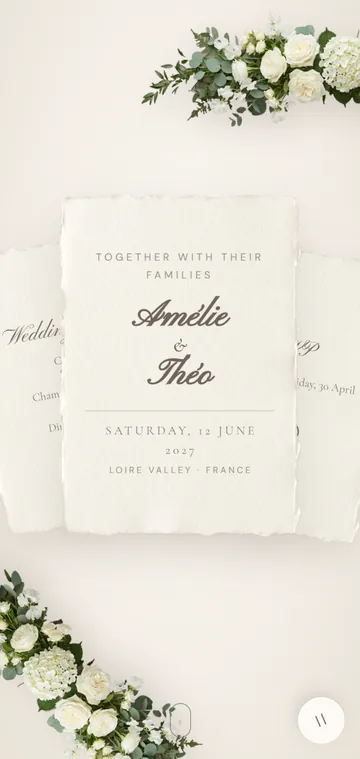
A well-designed digital invitation is now accepted for almost every kind of wedding, including formal ones. What matters is that it feels personal: send it to each guest yourself rather than posting it in a group, and keep a few printed copies for guests who would rather have paper. Classic designs such as Pearl, Vellum and Heirloom keep the feel of fine stationery, while Blush, Petal and Wildflower are softer and more romantic. Our complete guide to digital wedding invitations covers everything else, from cost to sending.
Partners of married, engaged or cohabiting guests should be invited together. For others, pick one plus-one rule and apply it to everyone.
Use “The [surname] family” or list each name. Naming children makes it clear they are invited; naming only the adults signals they aren’t.
No. A personal, well-designed digital invitation is widely accepted today. Send it individually and offer a printed copy to anyone who prefers paper.
No. Put it on your wedding website or in a gifts section, worded as an option rather than an expectation.
Usually 8–12 weeks before the wedding, with the RSVP deadline 3–4 weeks before the day.
Yes, as long as it is at least six weeks before the wedding so the timing doesn’t stand out.
An honest comparison of cost, convenience, etiquette and guest experience, so you can decide what suits your wedding and your guests.
Set the right RSVP deadline, word it clearly, handle plus-ones and children, and follow up without awkwardness.

Formal, modern and casual wording with the right order of names, hosts and details, plus reception-only and blended-family examples.