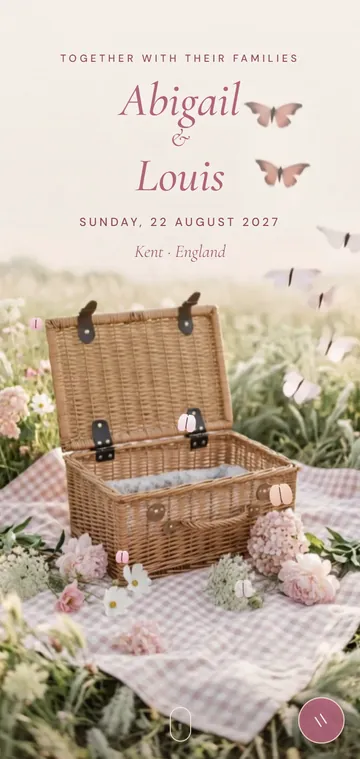
Digital vs paper wedding invitations: which should you choose?
An honest comparison of cost, convenience, etiquette and guest experience, so you can decide what suits your wedding and your guests.
Blog / Wedding invitation websites
Wording · 5 min read
Formal, modern and casual wording with the right order of names, hosts and details, plus reception-only and blended-family examples.
New to digital invitations? Read the complete guide to digital wedding invitations.
Wedding invitation wording follows a simple pattern: who is hosting, the request, the couple, the date and time, the place, and what comes next. Get that order right and any style, from formal to playful, reads naturally.
Mr and Mrs James Carter request the pleasure of your company at the marriage of their daughter Emily to Thomas Hale, Saturday the twelfth of June, two thousand twenty-seven, at four o'clock.
Together with their families, Emily Carter and Thomas Hale invite you to celebrate their marriage.
Mr and Mrs Carter and Mr and Mrs Hale invite you to the wedding of their children, Emily and Thomas.
Emily Carter and Thomas Hale would love you to join them as they say I do.
We're tying the knot! Join Emily and Tom for a day of love, food and dancing.
Eat, drink and be married! Celebrate with Emily & Tom.
We found our happily ever after. Come celebrate it with us.
Together with their children, Sara and Daniel invite you to celebrate their marriage.
With joy, Sara Ahmed and Daniel Reed invite you to witness the beginning of their new chapter.
Please join us for a celebration of the marriage of Emily and Thomas, with dinner and dancing from seven o'clock.
Use this when the ceremony is small or abroad and a larger party follows at home. Make it clear the ceremony has already taken place, or is private.
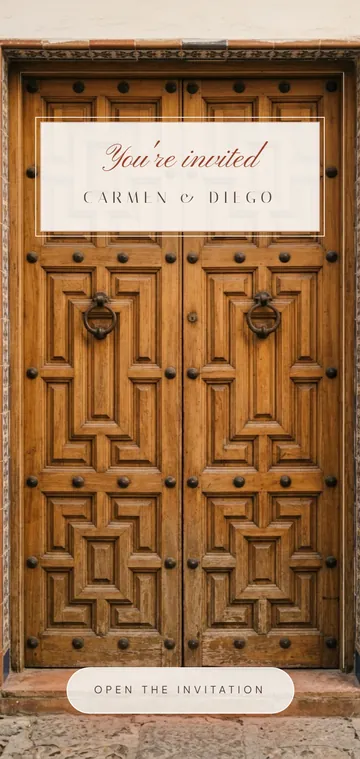
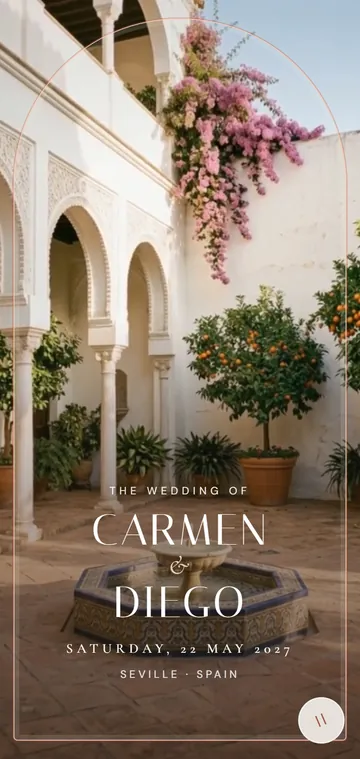
A wedding invitation website gives you room for more than one card can hold: your story, the schedule, travel tips and questions, each in its own section with wording you can edit after you share. Designs such as Sevilla, Hydrangea and Velvet Rose open like real stationery. For replies, see our RSVP etiquette guide.
Traditionally the bride's name comes first when her parents host. When both families or the couple host, either order is fine; choose what sounds best.
'Honour of your presence' traditionally signals a ceremony in a place of worship; 'pleasure of your company' is used for other venues.
Yes. A short line such as 'Dinner and dancing to follow' tells guests to plan for the evening.
Host it in your own names, or use 'Together with their families' to include your parents without naming them as hosts.
On the invitation and in how you address it. A website can repeat it, but the invitation should say it too.
Yes. Edit it in your dashboard and guests see the update on the same link.
An honest comparison of cost, convenience, etiquette and guest experience, so you can decide what suits your wedding and your guests.
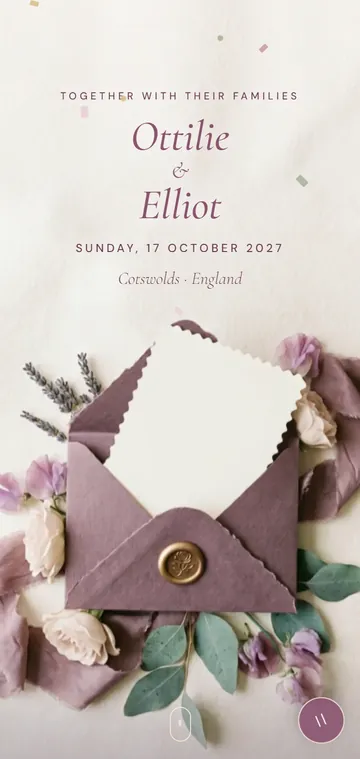
Set the right RSVP deadline, word it clearly, handle plus-ones and children, and follow up without awkwardness.
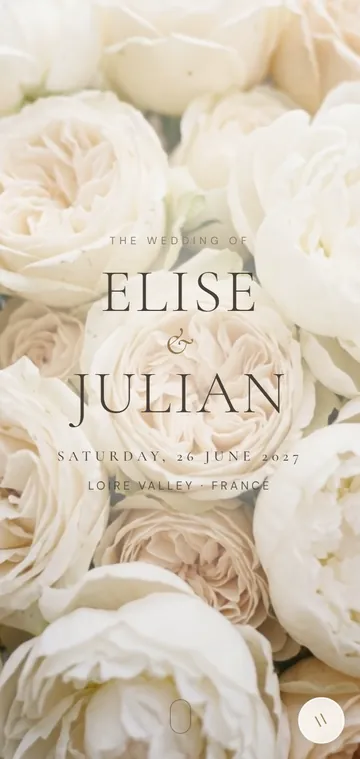
What to include, how to collect RSVPs, how to share it with guests and the mistakes to avoid.